
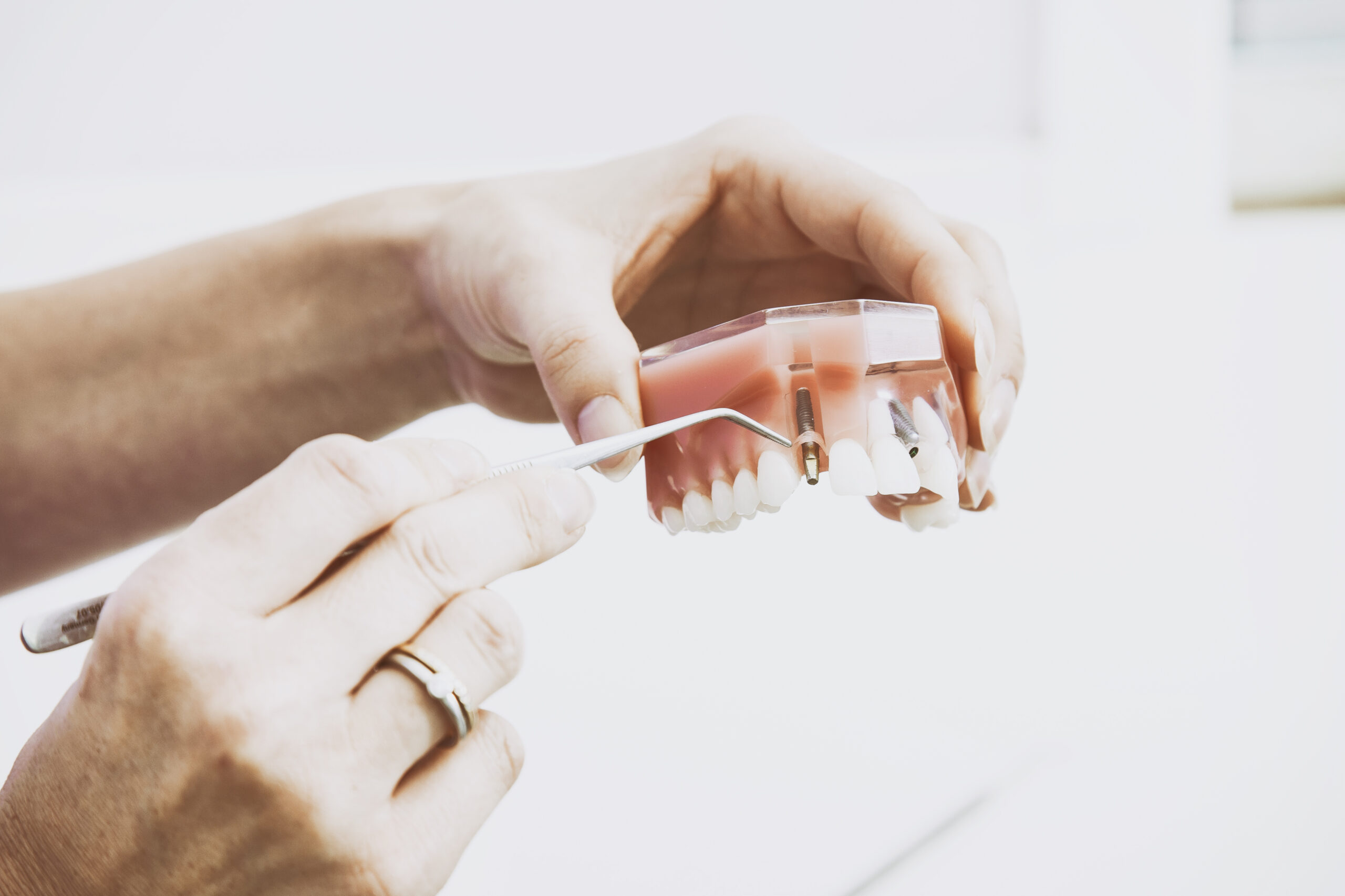

Full-mouth implant rehabilitation is a comprehensive plan for patients with many missing teeth or teeth that cannot be maintained long-term. The aim is to rebuild fixed chewing function, facial support and smile aesthetics. It is not only about placing implants; dental implant treatment, denture and prosthetic planning, bite analysis and surgical safety must work together.
Does full-mouth treatment mean one implant for every tooth?
No. In fully edentulous or severely compromised mouths, placing one implant for every missing tooth is often unnecessary. Depending on bone volume and prosthetic design, implant-supported fixed bridges, hybrid prostheses, All-on-Four/All-on-Six-style concepts or conventional implant-supported dentures may be considered.
Who may need this planning?
Full-mouth planning may be suitable for patients who struggle with removable dentures, have widespread tooth loss, reduced chewing function, advanced decay or loss of periodontal support, or want to restore function and appearance together. If the upper jaw has significant bone deficiency, sinus lift, bone grafting or, in selected advanced cases, zygomatic implants may also be discussed.
How is the plan made?
The first step is to evaluate the remaining teeth, gum tissues, jaw joint, bite and bone volume. A panoramic x-ray may not be enough; CBCT imaging when clinically indicated, photographs and prosthetic design inform the plan. Oral surgery and prosthetic planning should serve the same goal: fixed teeth that are cleanable, comfortable, functional and maintainable over time.
Timeline for international patients
For patients travelling from abroad, the schedule must be realistic from the beginning. In some cases, extractions, implants and temporary fixed teeth can be planned in the same treatment period. In others, healing time is needed before final teeth. A clear dental tourism plan should explain flights, accommodation, temporary prostheses and final restoration appointments.
Maintenance and long-term success
After full-mouth implant treatment, maintenance is essential. Cleaning under fixed bridges, managing bruxism with a night guard when needed, professional controls and early recognition of infection signs all matter. Problems such as peri-implantitis are easier to manage when detected early.
Choosing between fixed and removable teeth
A fixed restoration is not automatically the better fit. Lip support, speech, the space the prosthesis occupies and your ability to clean it all matter. Teeth that can reasonably be maintained should not be removed merely to fit a standard implant concept. A try-in or provisional restoration can help you and the team assess speech and cleaning access as well as appearance.
| Option | Daily use and maintenance |
|---|---|
| Fixed implant bridge | You do not remove it. Its underside must remain accessible, with suitable interdental cleaning demonstrated. |
| Implant-retained removable denture | You remove it for cleaning. It can provide lip support; its retaining components may wear and need replacement. |
| Conventional complete denture | No implant operation is required. Bone and soft-tissue anatomy affect retention, and fit needs review. |
Implant numbers are not quality scores. Their distribution, available bone, opposing teeth and the span of the planned restoration influence the design. Ask the written plan to explain the temporary teeth, the conditions for fitting definitive teeth and where repairs would be arranged if a component breaks.
Frequently asked questions
Are four implants enough for everyone?
No. The number and distribution depend on the jaw and prosthesis design. More implants do not automatically mean a better outcome.
Can I remove a fixed bridge at home?
No. A dentist removes it if necessary. Daily cleaning uses the tools demonstrated to you rather than taking the bridge apart.
Why might an implant-retained removable denture be chosen?
Lip support, access for cleaning or anatomical considerations may favour it. Retaining attachments can need maintenance and replacement as they wear.
Will I receive definitive teeth on the operation day?
Same-day teeth are often provisional and are not suitable for every case. Initial stability and healing influence when the definitive restoration can be fitted.
What should I do about bleeding under a bridge?
Do not assume it is simply caused by brushing. A dentist should check the tissues and cleaning access. Increasing swelling, discharge or looseness should be assessed promptly.
Are follow-up visits only about the implants?
No. They also assess the gums, bite, screws and attachments, restoration wear and your cleaning technique. Review intervals depend on individual risk.


